
Choosing a high-pressure rubber hose is not simply a matter of selecting the highest pressure rating. In hydraulic equipment, mining machinery, oil drilling systems and other industrial applications, hose performance is affected by working pressure, pressure pulsation, temperature, conveyed medium, bending radius and external abrasion.
An unsuitable hose may initially meet the required pressure rating but still experience premature cracking, leakage, reinforcement fatigue or accelerated aging during operation. For industrial buyers, evaluating the actual operating conditions before purchasing is essential to reducing hose failures and maintenance costs.
Hengshui Zhehan Rubber & Plastic Products Co., Ltd. specializes in the research, development, production and sales of rubber and plastic products. Its product range includes high-pressure hoses, low-pressure hoses, steel wire braided and spiral hoses, ultra-high-pressure hoses and hydraulic hoses for engineering machinery, mining, oil drilling, hydraulic equipment and other industrial applications.

A hose's nominal working pressure is only one part of the selection process. Before placing an industrial hose order, buyers should evaluate the following operating conditions:
Considering these factors together helps buyers avoid selecting a hose based only on its pressure rating while overlooking conditions that can shorten service life.
Mining equipment often operates under heavy loads, frequent pressure fluctuations and harsh external conditions. Hydraulic hoses may be exposed to rock particles, metal edges, vibration and repeated movement.
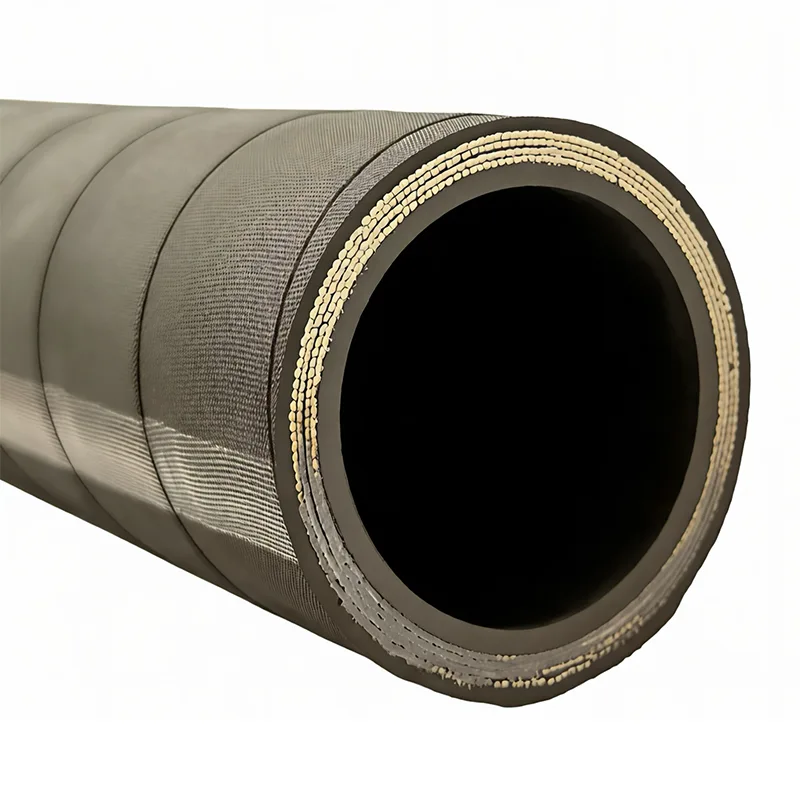
For these applications, hose construction should be selected according to the actual pressure and movement requirements. Steel wire reinforced hoses are commonly used where higher pressure resistance and reinforcement strength are required. In areas exposed to continuous external abrasion, an appropriately designed outer rubber layer can provide additional protection.
When purchasing hoses for mining machinery, buyers should pay particular attention to:
Excavators, loaders, lifting equipment and other construction machinery typically have hydraulic systems involving frequent movement and repeated bending.
A hydraulic hose used in these systems must withstand the required pressure while maintaining sufficient flexibility for the installation space and equipment movement. Excessive bending, twisting or forcing a hose below its recommended bending radius can place additional stress on the reinforcement layer and accelerate fatigue.
For mobile hydraulic equipment, procurement teams should confirm the working pressure, pressure pulsation, bending radius, hose length, routing, operating temperature and fitting configuration before placing an order.
For oilfield, petrochemical and chemical-related applications, pressure resistance alone cannot determine hose suitability. The conveyed medium can directly affect the inner tube material and the long-term performance of the hose.
Hydraulic oil, fuel, water-based emulsions and different chemical media may require different material compatibility considerations. A hose that performs well with hydraulic oil may not necessarily be suitable for another chemical medium.
Before purchasing, buyers should provide the supplier with the type of conveyed medium, concentration where applicable, operating temperature, working pressure, flow conditions, hose size and connection requirements.
Temperature is another factor frequently overlooked during hose selection. Continuous exposure to temperatures outside the applicable range can accelerate rubber aging and affect flexibility, sealing performance and reinforcement durability.
Both the temperature of the conveyed medium and the ambient temperature should therefore be considered. For equipment operating in high-temperature environments, buyers should confirm the applicable temperature range of the complete hose assembly rather than assuming that a high-pressure specification automatically means high-temperature resistance.
Even a properly rated hose can fail prematurely if it is installed incorrectly. A bending radius that is too small, excessive twisting, sharp contact points or inappropriate hose routing can place unnecessary stress on the reinforcement layer.
Repeated movement during equipment operation can further increase this stress and accelerate reinforcement fatigue. Buyers should therefore confirm the available installation space, hose routing and movement requirements before finalizing hose length and specifications.
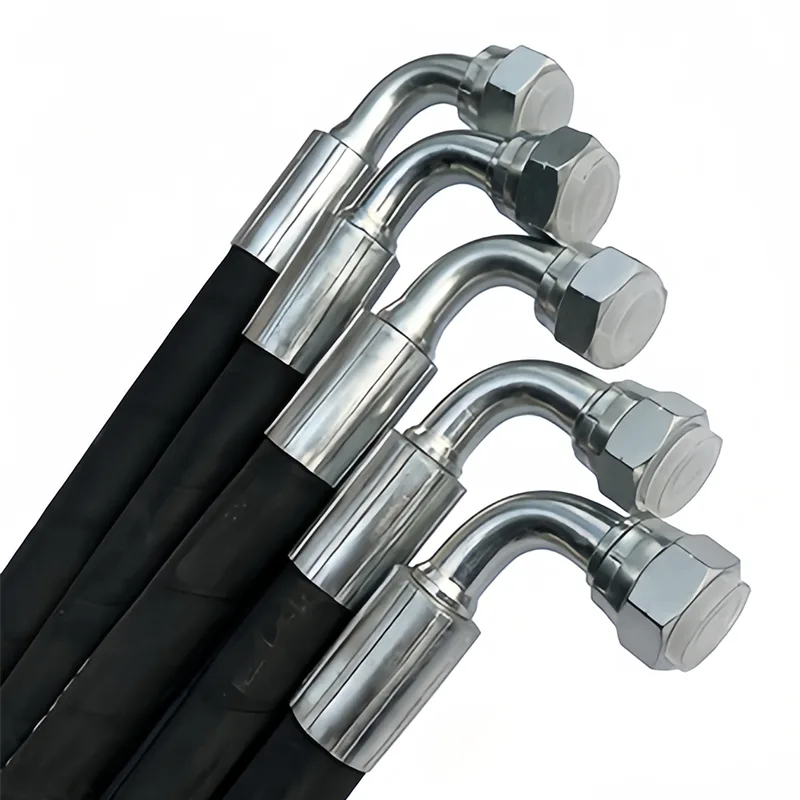
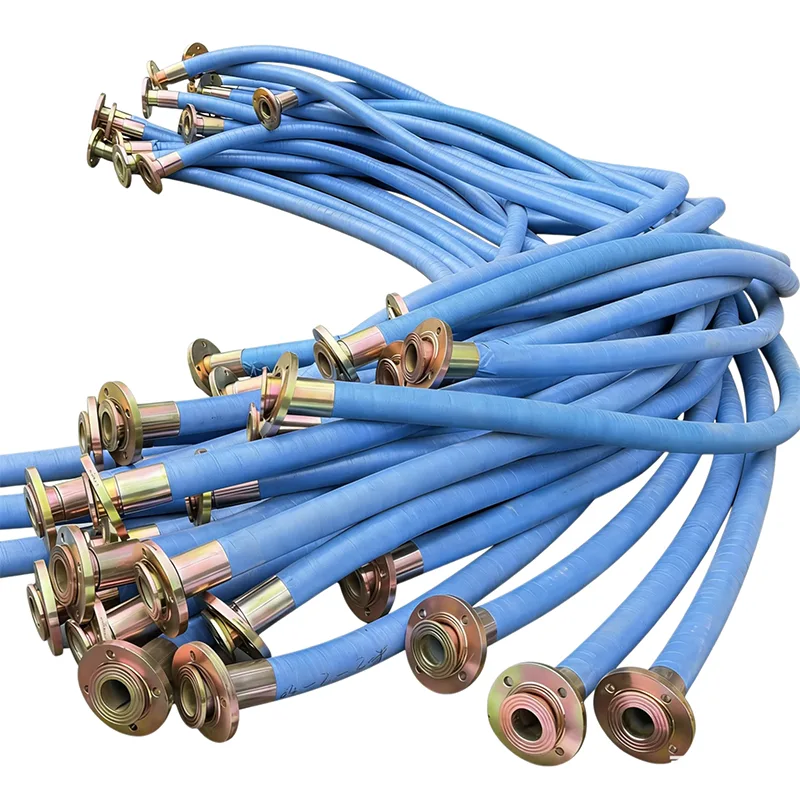
The connection configuration should also be considered. Depending on the application, hose assemblies can be supplied with different metal joints, flanges or unions to match the customer's equipment and installation requirements.
Hengshui Zhehan Rubber & Plastic Products Co., Ltd. was established in June 2018 and is located in Jingxian County, Hengshui City, Hebei Province, an established rubber and plastic manufacturing area.
The company currently has more than 120 employees, including 18 engineering and technical personnel. Its core product range covers high-pressure hoses, low-pressure hoses, steel wire braided hoses, steel wire spiral hoses, ultra-high-pressure hoses, hydraulic hoses, seals, waterstops, bridge bearings, nylon resin tubes and silicone products.
The company also manufactures supporting components such as metal joints, flanges and unions, allowing customers to source hose assemblies and related components according to project requirements.
For high-pressure hose applications, Hengshui Zhehan uses rubber materials and high-strength steel wire reinforcement to produce hose constructions for demanding industrial environments. Different hose structures, sizes and connection configurations can be selected according to application requirements.
Hengshui Zhehan has professional production equipment and testing instruments and has established a quality control process covering raw material procurement, production processing and finished-product inspection.
The company applies quality control throughout the manufacturing process to maintain product consistency and performance. Its engineering and technical team also supports product development and the optimization of hose specifications for different industrial applications.
For project-based hose procurement, buyers should provide more than the product name and nominal diameter. The following information can help suppliers evaluate the appropriate hose construction:
Providing these details before quotation helps the supplier evaluate the application more accurately and reduces the risk of specification changes after production.
There is no single high-pressure rubber hose that is suitable for every industrial application. The appropriate hose depends on the combination of pressure, temperature, medium, movement, bending conditions and external environment.
For overseas buyers sourcing hydraulic and industrial hose assemblies, selecting the product according to actual operating conditions is more effective than simply choosing the highest available pressure specification.
With its experience in rubber and plastic product manufacturing, engineering personnel and range of high- and low-pressure hose products, Hengshui Zhehan Rubber & Plastic Products Co., Ltd. provides hose products and supporting components for engineering machinery, mining, oil drilling, hydraulic equipment and other industrial applications.
For project procurement or customized hose requirements, buyers can provide the working pressure, conveyed medium, operating temperature, hose dimensions, bending conditions and connection requirements for product evaluation and quotation.