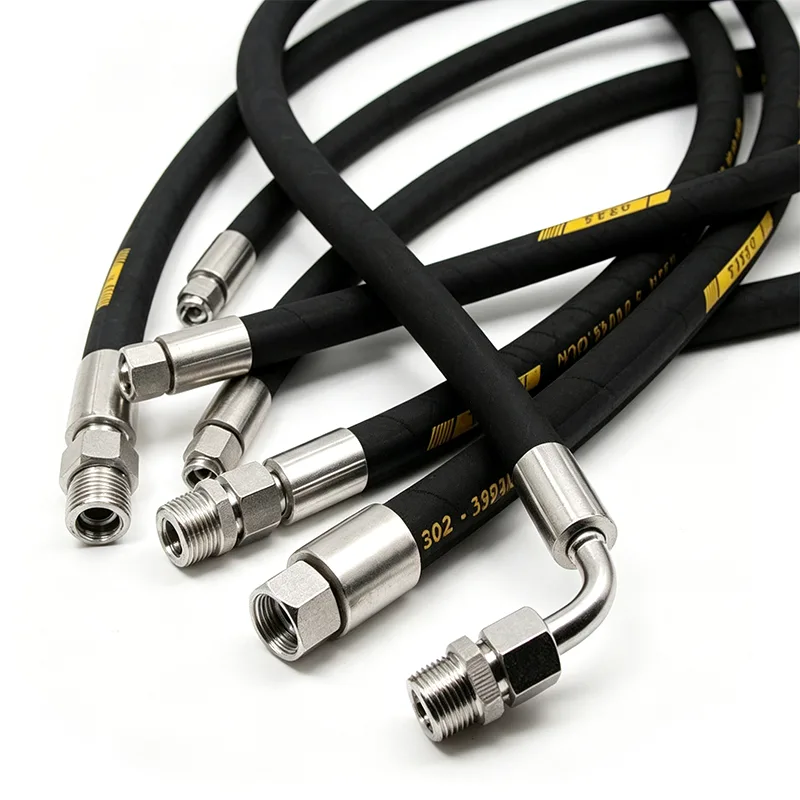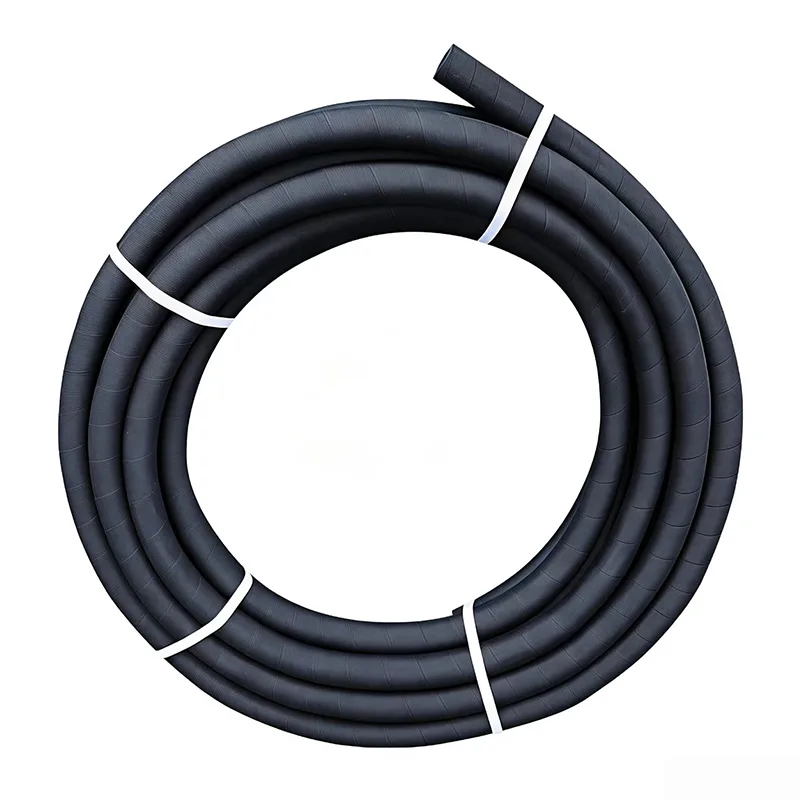

High-pressure rubber hose is a flexible fluid transfer component made from a rubber-based body reinforced with steel wire braiding or spiral winding. Its primary function is to convey hydraulic oil, water, gas, and other media under elevated working pressures. It is a critical part of hydraulic systems in construction machinery, mining equipment, oil and gas operations, and agricultural machinery.

Buyers evaluating high-pressure rubber hose should look beyond the pressure rating alone. Several interrelated performance parameters determine whether a hose will perform reliably over its intended service life.
Working pressure ratings for high-pressure rubber hose typically range from 10 MPa to over 80 MPa, depending on the number of steel wire reinforcement layers and the hose diameter. A quality hose is not only rated for a static pressure but is also tested for impulse fatigue—the ability to withstand repeated pressure spikes without delamination or burst. Industry standards such as ISO 6803 and SAE J517 define impulse test procedures. Hoses that pass these tests at the rated pressure provide measurable assurance of durability in systems with rapid valve actuation or reversing loads.
The inner tube compound determines which fluids the hose can safely convey. Nitrile rubber (NBR) is common for mineral hydraulic oil and water-oil emulsions. For phosphate ester fluids or certain biodegradable oils, alternative compounds such as EPDM or HNBR may be required. The outer cover must resist external oil, ozone, and UV exposure. Specifying the wrong compound can lead to tube swelling, cracking, or cover degradation long before the reinforcement reaches its fatigue limit.
Standard high-pressure rubber hose is generally rated for continuous operation between -40°C and +100°C, with some constructions tolerating intermittent exposure up to 120°C or 125°C. Cold flexibility and heat aging resistance depend on the rubber formulation and the adhesion between the tube, reinforcement, and cover. A hose that becomes brittle at low temperature or softens excessively at high temperature may fail mechanically even if the pressure rating is adequate.
For outdoor, mining, and construction applications, the outer cover is exposed to rock chips, sand, mud, and sunlight. Abrasion resistance can be quantified using DIN 53516 or comparable test methods, which measure volume loss under standardized abrasive conditions. UV and ozone resistance are evaluated through accelerated weathering tests. Hoses intended for permanent outdoor use should have a cover compound formulated specifically for these conditions.

High-pressure rubber hose is a safety-critical component. A hose that bulges, leaks, or bursts under pressure can cause equipment damage, fluid injection injuries, or fire hazards. Purchasing from a direct manufacturer rather than a trading intermediary offers several practical advantages:
Raw material control: The manufacturer can verify incoming rubber compounds, steel wire tensile strength, and wire diameter before production begins.
Process consistency: Braid angle, wire tension, and vulcanization parameters directly affect pressure capacity. In-house production allows these variables to be monitored and documented.
Traceability: Batch-level test records—pressure test results, impulse test data, dimensional inspection—can be retained and provided to the buyer.
Customization: Diameter, length, pressure class, cover color, branding, and end fitting configurations can be adjusted without coordination through third parties.
Hengshui Zhehan Rubber & Plastic Products Co., Ltd. operates 6 production lines with over 120 employees, including 18 engineering and quality-control technicians. The factory is located in Jingxian County, Hebei Province, and performs rubber compounding, wire braiding, cover extrusion, vulcanization, and final pressure testing in-house. Every production batch undergoes 100% pressure testing at 1.5 times the rated working pressure before shipment. The company has supplied hydraulic and industrial hoses to construction, mining, oil equipment, and agricultural machinery customers for over 8 years.
Even a correctly specified hose can fail prematurely if installed or maintained improperly. The following practices help maximize service life and reduce unplanned downtime.
Avoid twisting the hose during assembly. Twisting reduces pressure capacity and can cause fitting separation.
Respect the published minimum bend radius. Bending tighter than the limit can kink the reinforcement and create a stress concentration.
Use protective sleeving or routing clamps when the hose passes near sharp edges, hot surfaces, or moving parts.
Do not exceed the rated working pressure or temperature range.
Be aware of pressure spikes. If the system generates transient spikes above the rated working pressure, select a hose with a higher pressure class or install a pressure accumulator.
Confirm media compatibility before use. Strong acids, alkalis, and chlorinated solvents require special compounds that standard hydraulic hose does not provide.
Check the outer cover regularly for cuts, abrasion, blistering, or exposed wire.
Inspect fittings for leaks, corrosion, or loosening.
Replace any hose that shows visible reinforcement damage, permanent deformation, or cover cracking. Do not attempt to repair a damaged high-pressure hose.
Store unused hose in a cool, dry, ventilated area away from direct sunlight and ozone sources such as electric motors.
Avoid stacking heavy objects on hose coils.
Flush and drain hoses before long-term storage if they have been used with water-based fluids.