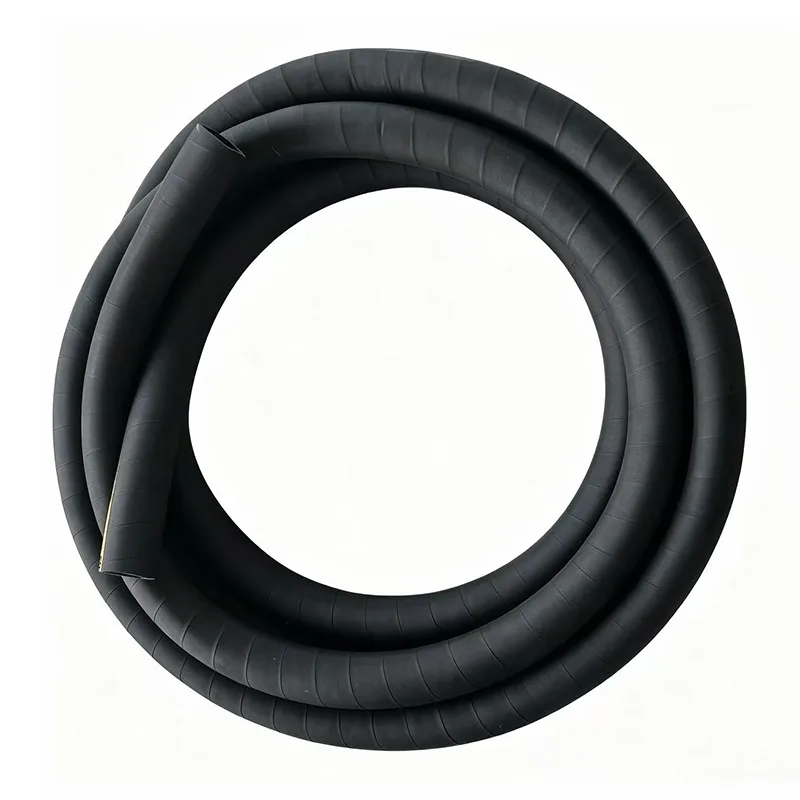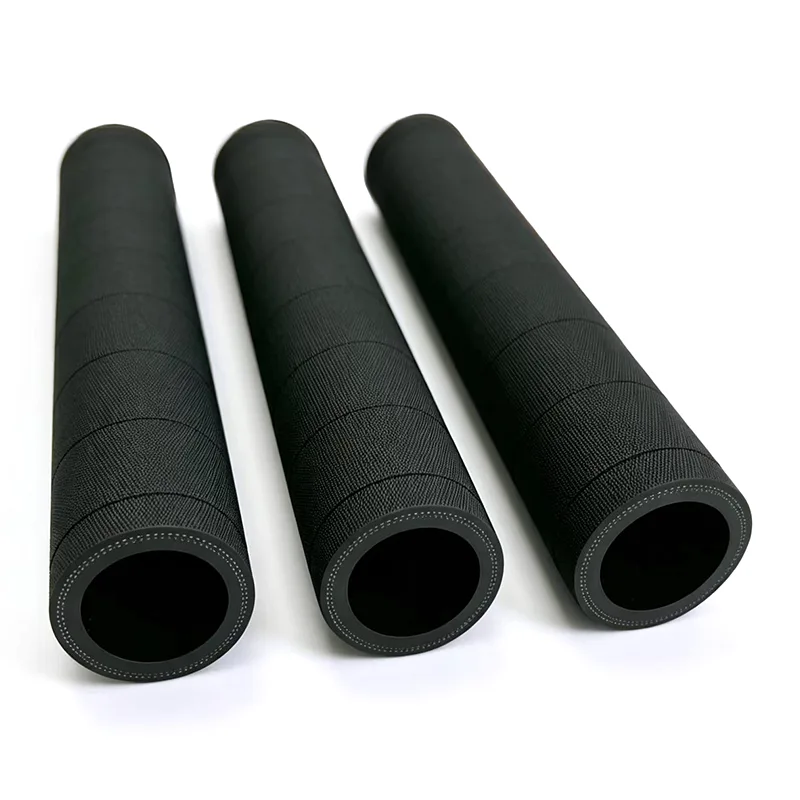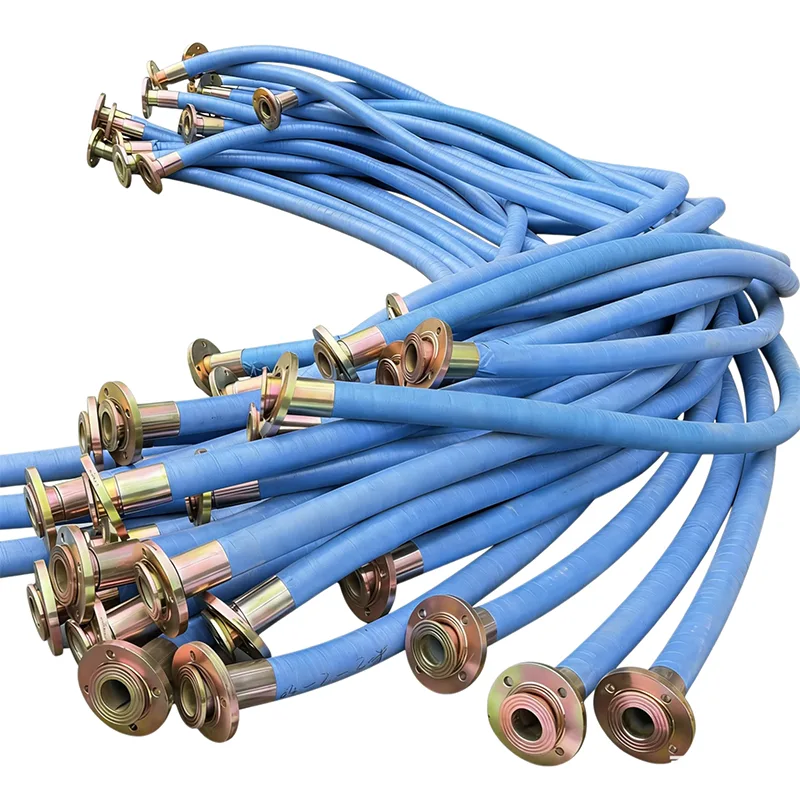

High-pressure rubber hose is not simply a rubber tube. It is an engineered composite component designed to contain and direct pressurized fluids—hydraulic oil, water, compressed air, and certain chemical media—while flexing, absorbing vibration, and resisting environmental exposure. Understanding how it works helps buyers specify the correct hose and avoid premature failures.

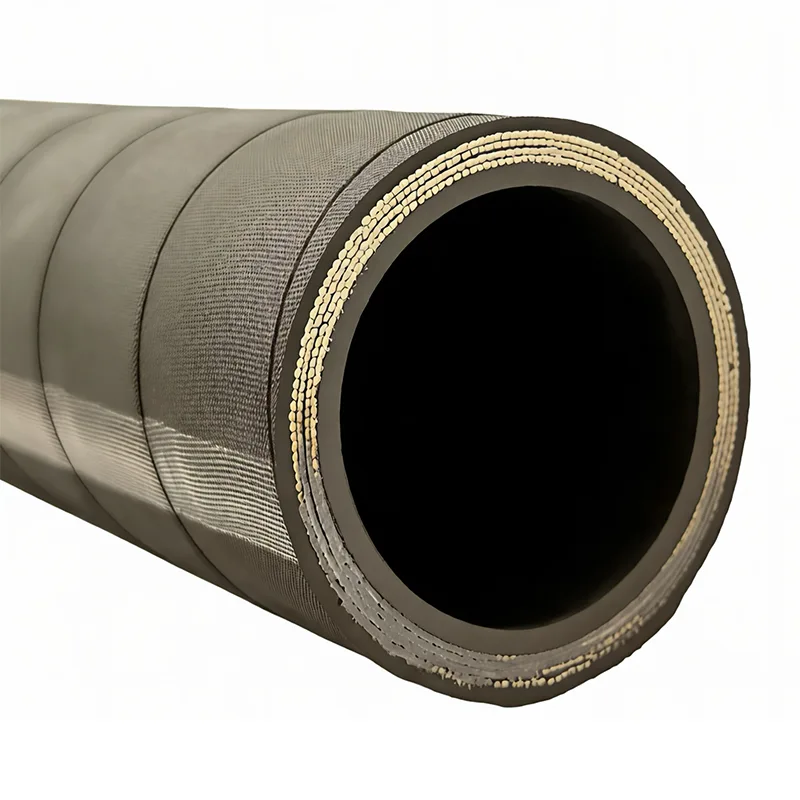
A typical high-pressure rubber hose consists of three functional layers:
The inner tube is the fluid-contact layer. Its primary job is to seal against the conveyed medium and prevent permeation or leakage. The rubber compound is selected for compatibility with the specific fluid—nitrile rubber (NBR) for mineral hydraulic oil, EPDM for phosphate ester fluids, and other compounds for water, air, or mild chemicals. An incompatible inner tube can swell, harden, or crack, leading to leakage even if the reinforcement remains intact.
The reinforcement is the pressure-containing element. It is usually made from steel wire braided or spirally wound around the inner tube. When pressurized fluid exerts force radially outward, the reinforcement carries the hoop stress and prevents the hose from expanding excessively. The number of wire layers, wire diameter, and braid angle determine the hose’s working pressure, burst pressure, and impulse life. A hose with insufficient reinforcement may bulge or burst under pressure.
The outer cover protects the reinforcement from abrasion, UV radiation, ozone, oil, and mechanical damage. In outdoor, mining, and construction environments, the cover is the first line of defense against rock chips, sand, mud, and sunlight. If the cover is cut or worn through, the steel reinforcement can corrode and lose strength.
When pressurized fluid enters the hose, it first contacts the inner tube. The inner tube transfers the load to the reinforcement. The steel wire structure resists expansion and maintains the hose’s shape. The outer cover protects the reinforcement from external damage. The rubber layers also distribute stress and allow the hose to flex without kinking. This composite action is the underlying principle of how high-pressure rubber hose works.
The two main reinforcement designs have different performance characteristics:
Wire braid: Multiple wires are interlaced in a woven pattern. Braided hose generally offers good flexibility and is common for medium- to high-pressure applications, such as 2-wire and 4-wire braided hydraulic hose.
Wire spiral: Multiple wire layers are wound in alternating directions. Spiral construction can achieve higher pressure ratings and is often used for larger-diameter, high-pressure lines, but it is typically less flexible than braided hose.
Industry standards such as ISO 6803, SAE J517, and EN 853 define impulse test procedures, pressure ratings, and dimensional requirements. Buyers should verify that a hose has been tested to the relevant standard for their application rather than relying only on a nominal pressure figure.
Several variables determine whether a high-pressure rubber hose will perform reliably in service:
Working pressure is the maximum continuous pressure the hose is designed to handle. Burst pressure is the pressure at which the hose fails. Impulse pressure refers to rapid pressure spikes that occur when valves open or close, cylinders reverse, or loads shift. A hose must be selected for both the working pressure and the expected impulse conditions. Pressure spikes above the rated working pressure can shorten service life.
Standard high-pressure rubber hose is often rated for continuous operation from -40°C to +100°C, with some constructions tolerating intermittent exposure up to 120°C or 125°C. Cold flexibility and heat aging resistance depend on the rubber formulation. A hose that becomes brittle at low temperature or softens at high temperature may fail mechanically even if its pressure rating is adequate.
The inner tube compound must be compatible with the fluid being conveyed. Mineral hydraulic oil, water-oil emulsions, biodegradable oils, phosphate esters, and chemicals each require different rubber compounds. Using the wrong compound can cause swelling, hardening, or cracking. For aggressive media, special compounds may be required.
Hose routing affects service life. Twisting during assembly reduces pressure capacity. Bending tighter than the published minimum bend radius can kink the reinforcement and create a stress concentration. Contact with sharp edges, hot surfaces, or moving parts should be avoided through protective sleeving or clamps.
Abrasion, UV exposure, ozone, salt mist, and chemical spills can degrade the outer cover. Hoses used outdoors or in mining and construction should have a cover formulated for abrasion and weather resistance.
To specify and maintain high-pressure rubber hose correctly, confirm the following:
Maximum working pressure and expected pressure spikes
Required burst pressure and impulse life
Fluid type and compatibility with the inner tube compound
Ambient and fluid temperature range
Minimum bend radius and available installation space
Fitting type and crimping specification
Abrasion, UV, and chemical exposure conditions
During operation:
Do not exceed the rated working pressure or temperature range.
Inspect the cover regularly for cuts, abrasion, blistering, or exposed wire.
Check fittings for leaks, corrosion, or loosening.
Replace any hose that shows visible reinforcement damage, permanent deformation, or cover cracking. High-pressure hose should not be repaired.
Store unused hose in a cool, dry, ventilated area away from direct sunlight and ozone sources.

Because high-pressure hose is a safety-critical component, the manufacturing source matters. A direct manufacturer can control raw material quality, braid tension, vulcanization parameters, and final testing. Batch-level test records—pressure test results, impulse data, dimensional inspection—provide traceability that trading intermediaries may not be able to supply.
Hengshui Zhehan Rubber & Plastic Products Co., Ltd. has produced rubber and plastic hose products since June 2018. The factory is located in Jingxian County, Hebei Province, and operates 6 production lines with over 120 employees, including 18 engineering and quality-control technicians. Production processes include rubber compounding, wire braiding, cover extrusion, vulcanization, and final pressure testing. Every production batch undergoes 100% pressure testing at 1.5 times the rated working pressure before shipment. The company has supplied hydraulic and industrial hoses for construction machinery, mining equipment, oil and gas operations, and agricultural machinery for over 8 years, and can provide customized lengths, fittings, branding, and technical documentation for qualified buyers.
High-pressure rubber hose works through a composite structure: the inner tube seals and conveys the fluid, the steel wire reinforcement carries the pressure load, and the outer cover protects the reinforcement from environmental damage. Reliable performance depends on correct compound selection, adequate reinforcement, proper installation, and regular inspection. Buyers should evaluate suppliers based on verifiable test data, in-house production capability, and willingness to provide batch-level quality documentation—not simply on price per meter.
For technical datasheets, pressure rating charts, or application-specific selection assistance, contact the manufacturer directly with your system parameters.