
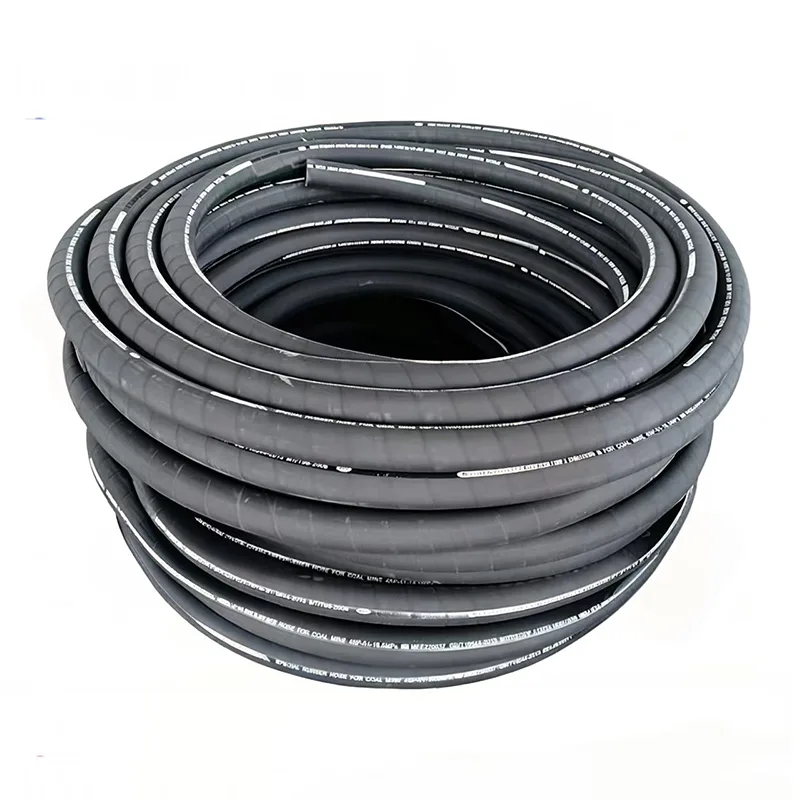
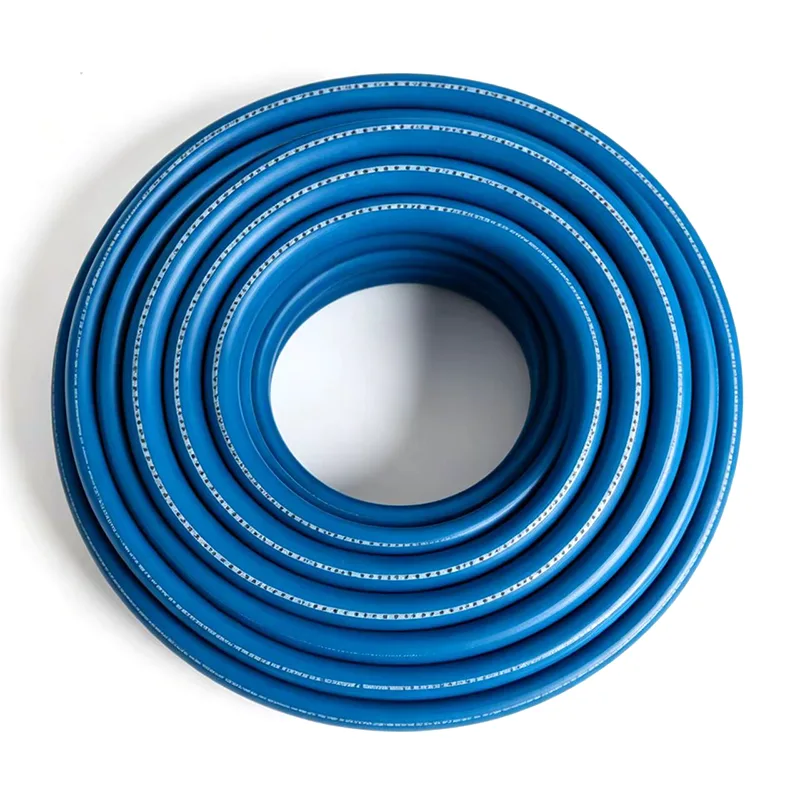
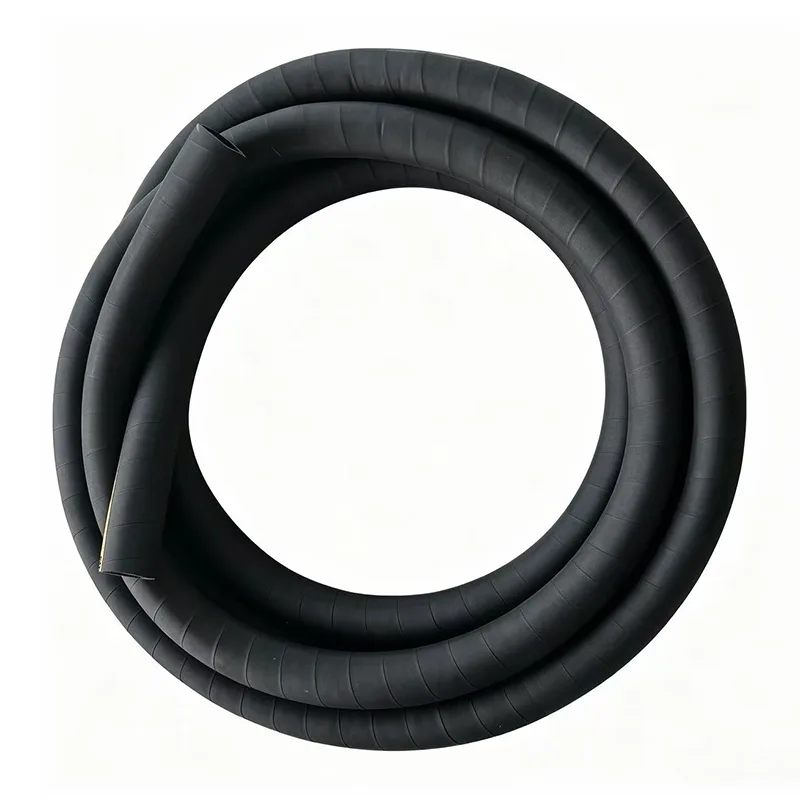
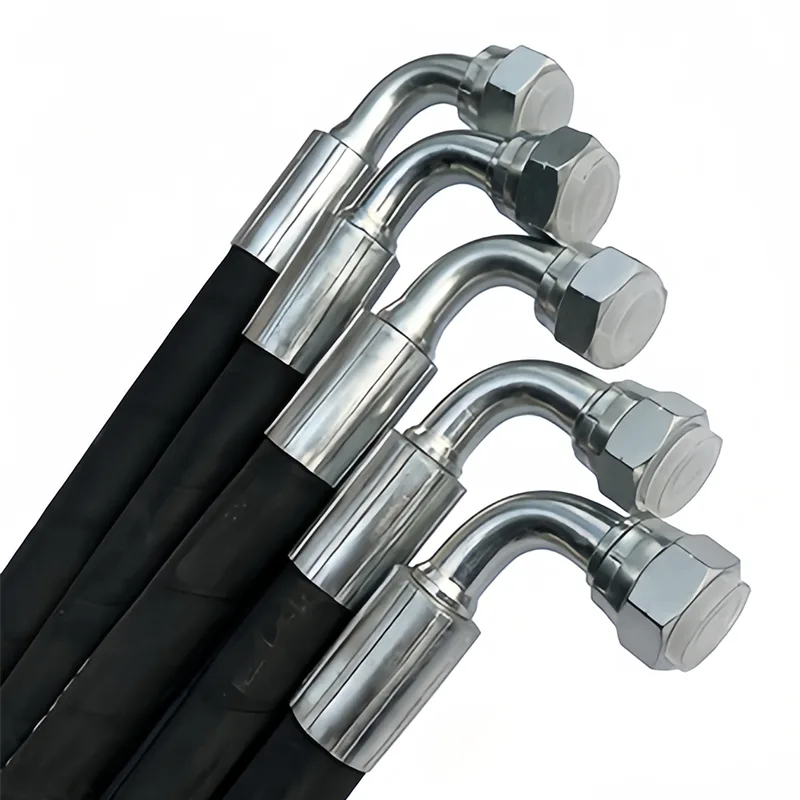


A fuel transfer hose fails on a supply vessel in rough seas. A cooling water line bursts on a drilling platform during a cold night shift. These failures share a common thread. The explosion-proof and high/low temperature resistant marine hoses wasn’t made for that environment.
At Hengshui Zhehan, we see marine fluid transfer as a safety critical function. That’s why we developed a burst resistant marine hose that stays reliable whether you’re working in Arctic waters, tropical anchorages, or anywhere salt spray and temperature swings conspire against ordinary rubber. It handles diesel, lubricating oil, seawater, and mild chemicals while holding up against pressure, heat, cold, and constant flexing.
Most general purpose hose is sold with a working pressure and a temperature range on the spec sheet. What the sheet doesn’t tell you is how quickly the cover stiffens when salt builds up on deck, or how the inner lining swells when in contact with warm fuel oil for weeks on end.
On ships and platforms, hose has to cope with daily temperature swings from freezing night air to engine room heat. Salt spray dries on the outer surface, drawing moisture into micro cracks that grow with every flex cycle. Inside, fuel or oil can leach plasticizers out of the rubber, turning a supple hose into something that cracks like old leather. A sudden pressure surge on a worn spot, and you have a rupture that nobody budgeted for.
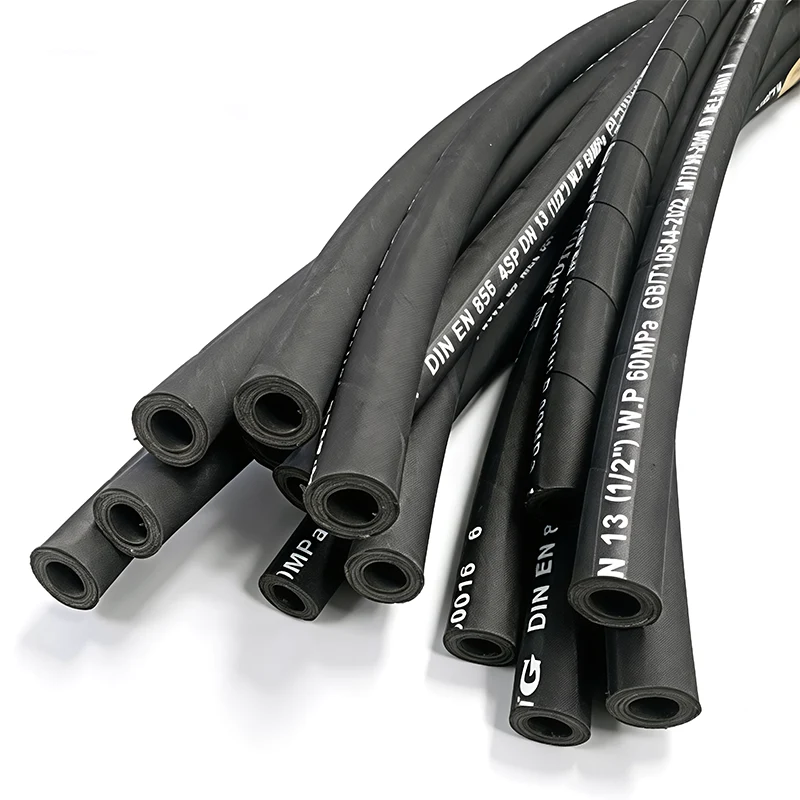
We built this explosion-proof and high/low temperature resistant marine hoses from the inside out for the way marine crews actually use it.
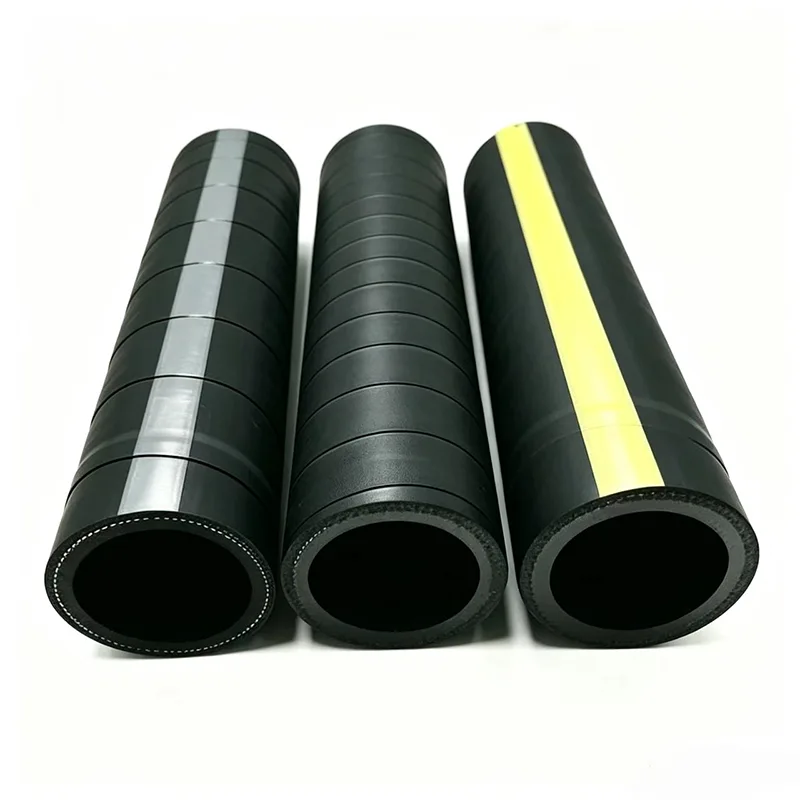
The inner lining is a carefully selected rubber compound that stays dimensionally stable when exposed to diesel, lubricants, and seawater. It doesn’t soften or swell to the point where it blocks flow or separates from the reinforcement.
The middle layer is a high strength polyester braid that acts as the burst resistant backbone. It’s laid in a precise angle to handle rated pressures while keeping the hose flexible enough to route through tight machinery spaces.
The outer cover is a weather resistant rubber that sheds salt water, UV, and oil mist without hardening. It stays pliable and crack free far longer than a standard industrial cover, which directly extends the time between hose replacements.
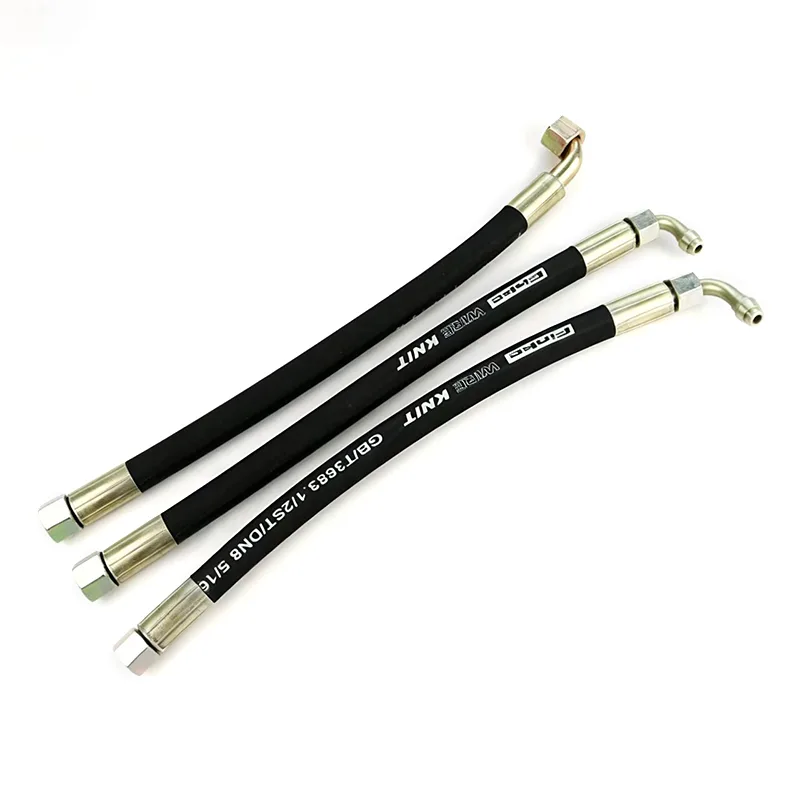
The entire assembly is crimped with matched fittings on controlled tooling, then proof tested. What arrives on your deck is a hose that can be installed and put to work immediately.
Fuel oil transfer, cooling water lines, lube oil top off systems, and hydraulic return circuits in engine rooms and on deck. The hose tolerates vibration, occasional fuel contact, and the tight bends found inside machinery spaces.
Seawater service lines, fire water supply, fluid transfer between tanks, and deck washdown systems. The hose withstands constant UV exposure, salt spray, and temperatures that can drop sharply at night.
Bunker barge discharge, loading arm hydraulics, shore side water and fuel supply lines. These applications involve repetitive bending, hauling, and exposure to sunlight and sea air. A hose that resists kinking and cracking saves time and reduces spill risk.
Transfer of light chemicals, drilling mud additives, and other non aggressive fluids where a burst could mean an environmental incident. The burst resistant construction and antistatic properties meet safety expectations for hazardous locations.
In cold climates, the hose doesn’t turn rigid. In tropical engine rooms and sun baked decks, it doesn’t go soft or deform. This forty percent wider effective temperature window compared to many standard marine hoses means fewer weather related failures.
The inner sealing layer, the polyester braid reinforcement, and the outer cover work together to handle working pressures up to twenty five bar. Burst ratings are well above the working limit, and the hose is built to meet marine safety standards for pressure containment.
The outer cover is formulated to resist salt water immersion, salt laden wind, and strong sun. After side by side exposure testing under marine conditions, these hoses outlast conventional rubber hose by up to sixty percent, reducing replacement frequency and cutting down on waste.
The hose can be bent and coiled repeatedly without kinking. It recovers its shape quickly, which makes it suitable for confined areas and dynamic applications where the hose moves with equipment. This also reduces stress at the fitting ends, a common source of leaks.
The hose meets marine industry requirements for flame retardance and antistatic performance. It doesn’t build up dangerous static charge during fuel transfer, and it won’t propagate a flame if exposed to fire. That matters in engine rooms, on tank decks, and in hazardous zones.
|
Parameter |
Technical detail |
|
Working pressure |
6 bar to 25 bar (custom high pressure builds available) |
|
Inside diameter |
6 mm to 200 mm (full size range, non standard diameters on request) |
|
Standard lengths |
10 m, 20 m, 30 m (cut to any specified length) |
|
Construction |
Lining: chemical resistant rubber. Reinforcement: high strength polyester braid. Cover: weather and oil resistant rubber |
|
Temperature range |
-40 °C to +120 °C |
|
Safety features |
Flame retardant, antistatic, burst resistant |
Before installation, inspect the hose for cuts, kinks, or soft spots. Make sure the fittings are tight and compatible with the hose size. Do not install a hose that shows any sign of shipping damage.
Route the hose so it doesn’t twist, kink, or rub against sharp edges. Support longer runs properly and avoid hanging heavy valves and fittings from the hose body.
Operate the hose within its rated pressure and temperature limits. Never use it to convey strong acids, strong solvents, or other fluids it wasn’t designed for without consulting us first.
After use, drain the hose and rinse off salt deposits and oil residue. Store hoses loosely coiled in a cool, dry, ventilated space away from direct sunlight and electrical equipment.
Inspect hoses regularly, particularly at the fitting joints and along any tight bends. A hose that shows blistering, deep cracking, or permanent deformation needs to be taken out of service. Don’t wait for a leak to tell you something is wrong.

What’s the smallest quantity we can order to try it out?
You can start with just a few lengths for trial. We keep common sizes in stock and ship small orders without any minimum quantity penalty. When you’re ready for a larger supply, we offer tier pricing and scheduled deliveries.
Can this hose handle diesel and light chemicals at the same time, or do we need separate hoses?
Our inner lining is resistant to diesel, lubricating oil, and many mild chemicals. If you want to use a single hose type for different fluids on board, we can confirm compatibility based on your list of substances. For aggressive solvents or strong acids, a specialized hose would be more appropriate.
We need specific end connections to match our ship’s piping. Can you supply them?
Yes. We can crimp or fit a wide range of end connections, including flanges, camlocks, and threaded fittings, directly onto the hose. Provide the specification or a sample fitting, and we’ll match it. Custom color coding and layline marking are also available.
What makes the hose antistatic and burst resistant?
The hose incorporates a conductive element within the cover or reinforcement to safely bleed static electricity away during fuel transfer. The burst resistance comes from the high tenacity polyester braid reinforcement and the controlled construction process that ensures uniform wall thickness and strong adhesion between layers.
Does this hose come with any marine certification?
We manufacture to internationally recognized marine safety standards and can supply material certificates, pressure test records, and batch traceability documentation. If you need specific class approval documentation, let us know and we’ll support the process.
What is your warranty on these hoses?
We stand behind our work. All hoses are warranted against material and manufacturing defects under normal marine operating conditions. If a problem arises, we replace the hose and work with you to prevent it from happening again.
Whether you need a few replacement hoses for a single vessel or a full set for a newbuild or platform upgrade, Hengshui Zhehan Rubber & Plastic Products Co., Ltd. is ready to help. Share your working pressure, inside diameter, required length, fluid types, and any special environmental conditions. We’ll provide a tailored quotation and a delivery schedule that matches your operational timeline. Factory direct quality, no middlemen, and a commitment to marine safety built into every length of hose.
Address
No. 7126, Zhanggehou Rubber & Plastic Base, Jingzhou Town, Jing County, Hengshui City, Hebei Province, Chinaa
Tel