


Salt water makes hydraulic hose failures happen faster. On offshore platforms, ships, and coastal machinery, a standard hose can swell, crack, and start leaking within months. The real cost goes beyond the replacement part. It shows up as lost operating time, safety risks, and expensive clean up work.
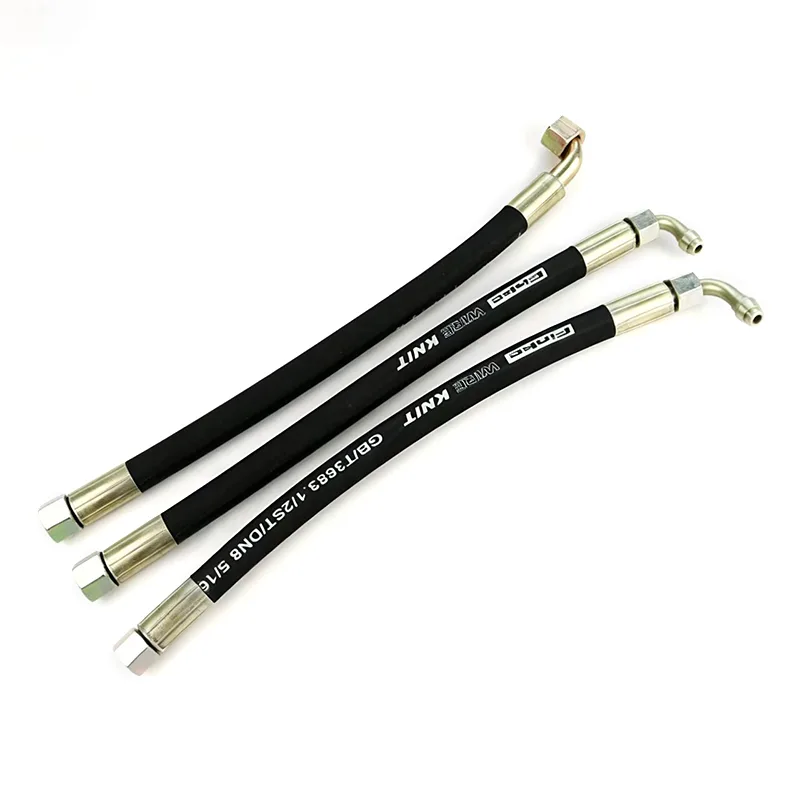
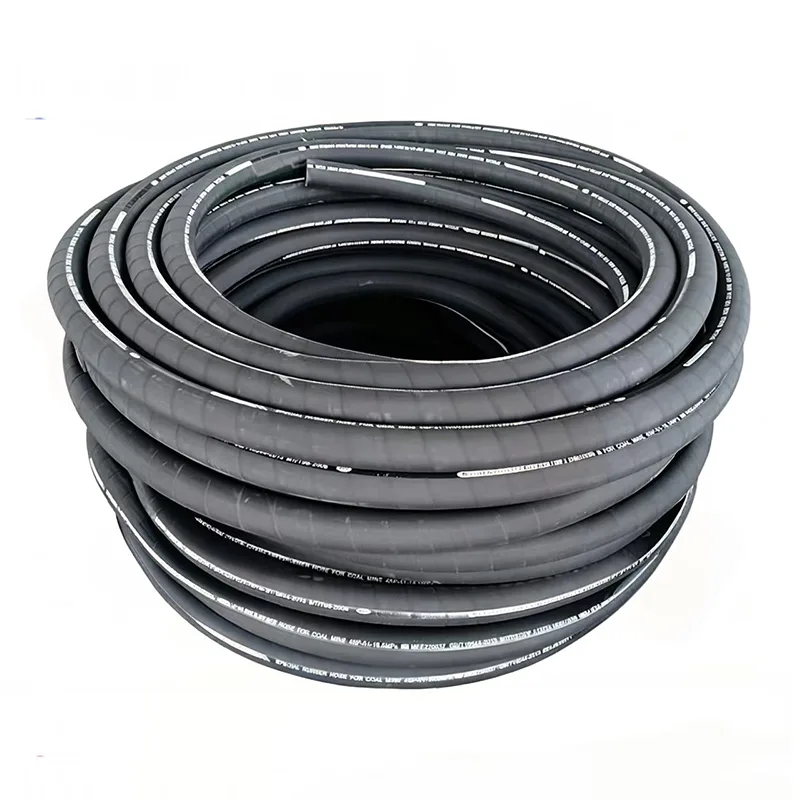
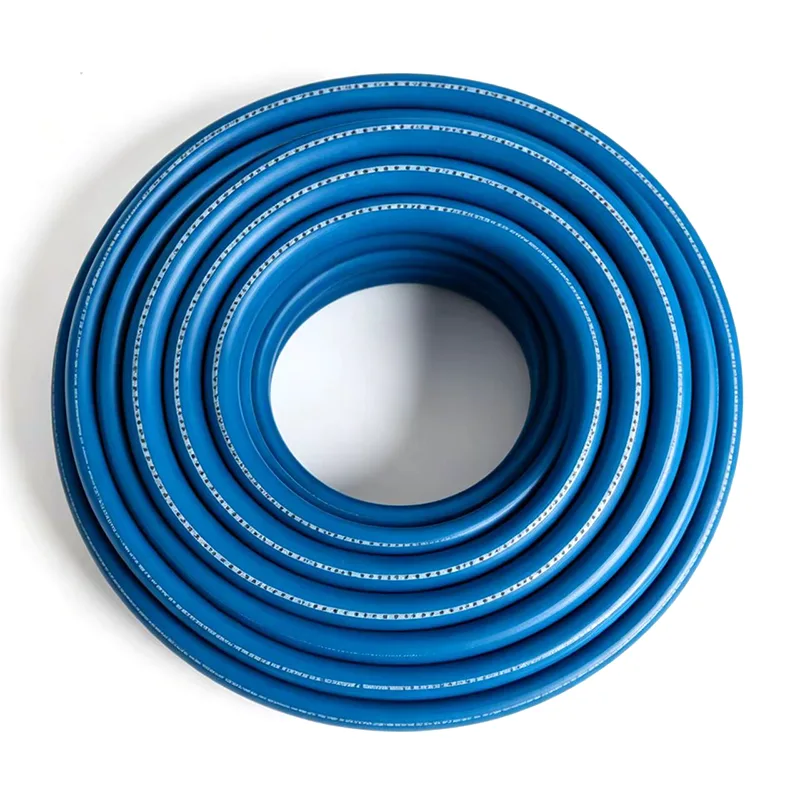
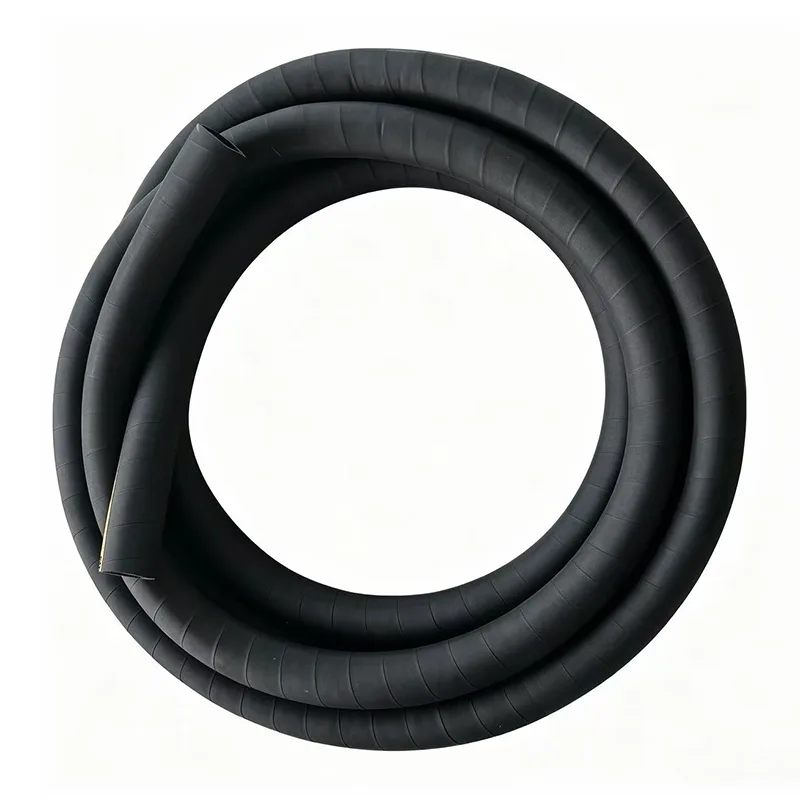
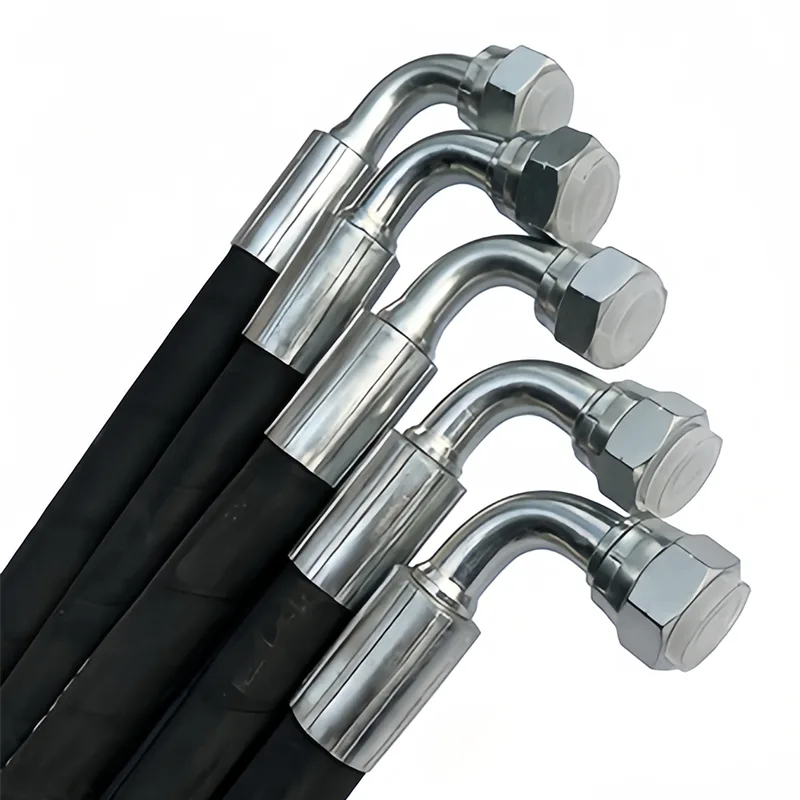
At Hengshui Zhehan, we developed a hose specifically for these conditions. Our Seawater Corrosion Resistant Steel Wire Braided Hydraulic Hose is built to stay reliable even when it is constantly splashed, temporarily submerged, or exposed to salt laden air.
Marine environments attack hydraulic hose on three fronts at once. Salt spray and seawater saturate the outer cover, making ordinary rubber brittle and cracked. Moisture then reaches the steel wire reinforcement and corrosion begins from the outside. At the same time, hot hydraulic oil inside the tube can accelerate chemical breakdown if the inner rubber is not formulated for aggressive conditions. Add constant pressure cycling and flexing, and the hose can fail in ways that a factory rated hose was never designed to handle.
The result is blistering, pitting, weeping fittings, and sudden blowouts that stop deck machinery, crane operations, and drilling equipment without warning.
Every layer of this hose is chosen with marine conditions in mind.
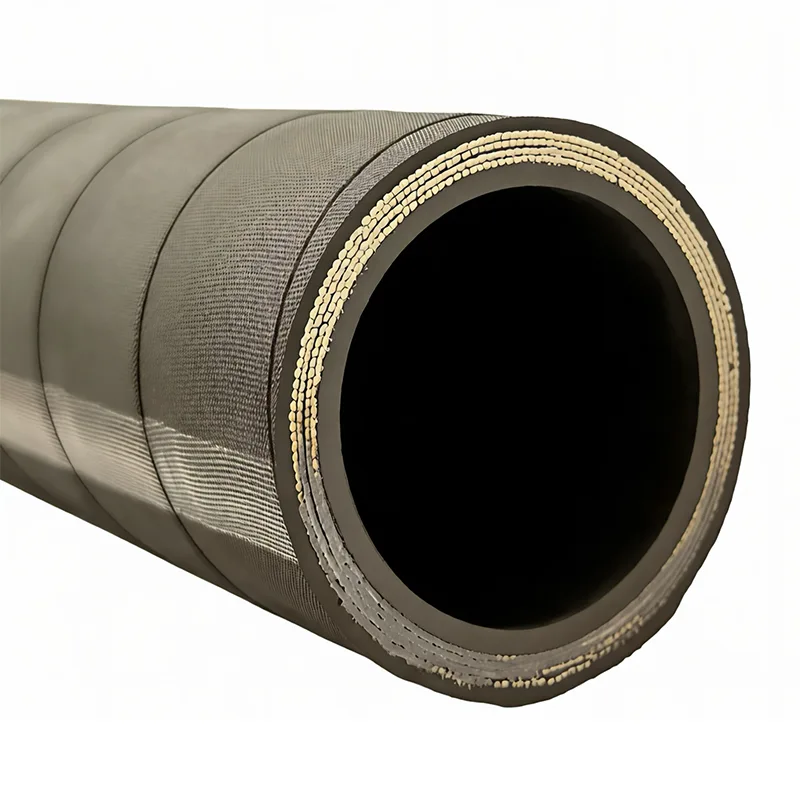
The inner tube uses a modified nitrile compound that resists not only hydraulic oil but also the traces of water and chloride that inevitably migrate through a system. This keeps the inner wall smooth and intact, and prevents the tube from swelling or delaminating over time.
The reinforcement layer is a high tensile carbon steel wire braid, applied in two or more layers with precise tension control. This gives the hose its pressure rating and also its resistance to vacuum collapse. Because the outer cover and inner tube seal the wire away from moisture, the steel stays dry and corrosion free throughout its service life.
The outer cover is a chloroprene based compound formulated for saltwater immersion and UV exposure. It resists cracking from ozone and sun, and it does not harden or craze after prolonged contact with seawater. Together, these three layers create a hose that handles the mechanical demands of a hydraulic system and the chemical demands of a marine environment at the same time.
Hydraulic systems on drilling rigs, wellhead control panels, and tensioners rely on hose that can take direct spray, green water, and constant salt fog while maintaining pressure integrity. A hose failure in these settings is more than a maintenance issue. It can become a safety and environmental incident.
Steering gear, anchor winches, deck cranes, and hatch covers all use hydraulics in wet, salty, and often confined spaces. These hoses must stay flexible and sealed even when salt crust builds on the outer cover and temperatures shift from tropical heat to cold current waters.
Ship to shore cranes, mobile harbor cranes, and bulk material handlers operate year round in salt air, often with hose assemblies fully exposed to rain and sea spray. A hose that doesn't degrade under UV and salt saves port operators from repeated unscheduled maintenance.
Winches, A frames, and launch and recovery systems for ROVs and sampling gear need clean, leak free hydraulics. A leak tight hose also prevents oil discharge into sensitive marine environments, helping operators stay within environmental permit limits.
The inner and outer rubber compounds have been tested under salt spray and immersion conditions for the equivalent of over 100,000 hours. They resist chloride attack, swelling, and surface degradation far longer than standard hydraulic hose. This directly translates into fewer change outs on seawater exposed circuits.
The multi layer carbon steel wire braid reinforcement delivers working pressures from 6 MPa to 40 MPa, with a burst pressure at least three times the rated working pressure. The hose handles pressure spikes and hydraulic shock common in marine winches, jacking systems, and HPU lines without bulging or rupturing.
The braid angle and rubber compound work together to absorb repeated bending and pressure pulses. Our Seawater Corrosion Resistant Steel Wire Braided Hydraulic Hoses have exceeded 200,000 impulse cycles with continuous flexing in our test lab, showing no cracking, no layer separation, and no loss of pressure integrity. Compared with general purpose hydraulic hose in the same salt spray test, service life can be extended by more than 60 percent.
The tube wall is dense and smooth, keeping oil in and seawater out. Permeation is below 1×10⁻¹¹ cm³·cm/cm²·s·Pa, which means very little fluid loss even over years of continuous service. This helps keep the bilge clean and reduces the risk of sheen on the water.
The hose remains functional from minus forty degrees Celsius to plus one hundred twenty degrees Celsius. It will not stiffen like a plastic rod during a North Sea winter or soften and blister near a hot engine room bulkhead.
|
Parameter |
Technical detail |
|
Working pressure range |
6 MPa to 40 MPa (higher pressures available on request) |
|
Inside diameter |
6 mm to 51 mm (tolerance ±0.5 mm, custom sizes supported) |
|
Standard coil lengths |
20 m, 30 m (cut to any length needed) |
|
Construction |
Tube: modified saltwater resistant NBR. Reinforcement: high tensile steel wire braid. Cover: weather resistant CR compound |
|
Temperature range |
-40 °C to +120 °C |
|
Applicable standards |
Manufactured in compliance with EN 853 and GB/T 10544; full batch traceability |
Route the Seawater Corrosion Resistant Steel Wire Braided Hydraulic Hose to avoid twisting, sharp bends, and chafing against metal edges. Never drop below the minimum bend radius. Keep hoses away from hot exhaust pipes and moving machinery parts. Use hose clamps and protective sleeves where abrasion is unavoidable.
During planned maintenance, wipe off salt deposits and visually check the cover for cuts, blisters, or soft spots. Look for any sign of oil mist near the fittings. Even a slight weep can allow seawater to wick into the reinforcement if left unattended.
Replace immediately if the outer cover is worn through to the reinforcement layer, or if you find permanent kinks, bulges, or fitting movement. A hose that feels unusually stiff or shows deep cracks when bent cold should be retired before it becomes a failure point.
Keep uncut hose coils and spare assemblies indoors, in a cool, dry, and ventilated space. Leave end caps on until just before installation. Do not store hoses near electrical equipment, chemical drums, or in direct sunlight.


Can we order just a small quantity to test on our vessel?
Yes. We ship short lengths and sample assemblies for field trials. You can start with a few meters, evaluate performance on your equipment, and come back when you are ready to outfit the full fleet.
Our system runs on biodegradable hydraulic oil to meet environmental rules. Is your tube compound compatible?
Our standard nitrile tube works well with mineral oil and most synthetic esters. Let us know the exact fluid you use and we will confirm compatibility or recommend an alternative tube formula.
Do you supply hoses with stainless steel fittings?
Absolutely. We can crimp stainless steel couplings, including 316 grade, to match your hose assembly. This prevents galvanic corrosion at the fitting and extends the life of the entire assembly in wet environments.
Can you help us get these hoses accepted by our classification society?
We provide material certificates, pressure test records, and traceability documentation to support your submission to DNV, ABS, or other class societies. Tell us what the surveyor needs and we will put the paperwork together.
What kind of warranty applies to these marine hoses?
All saltwater resistant hoses carry a 12 month warranty against defects in materials and workmanship. Every hose is pressure tested before shipping. If a warrantable issue occurs, we replace the hose and help you identify the cause so it does not happen again.
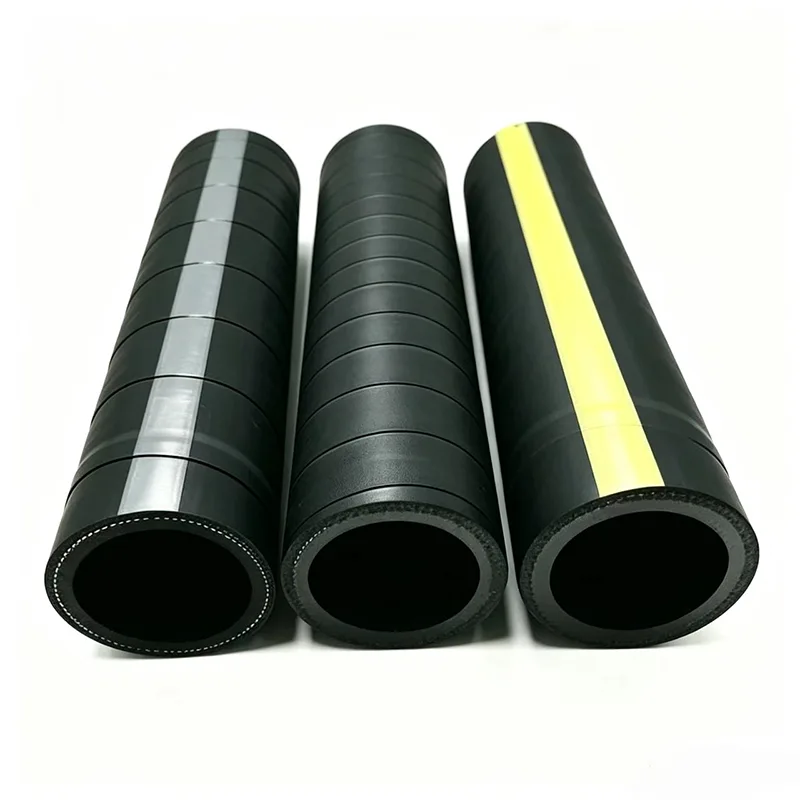
Can you print our company name and part numbers on the hose layline?
Yes. Custom branding, color coding for different pressure circuits, and tailored packaging are all part of our OEM service. Send us your artwork or marking specification and we will incorporate it into production.
Ready to upgrade your marine hydraulic circuits?
Whether you need replacement hose for a single deck crane or a full set of assemblies for a newbuild or retrofit, we are set up to help.
Contact Hengshui Zhehan Rubber & Plastic Products Co., Ltd. with your pressure requirements, inside diameter, needed lengths, and any special conditions like fluid type or extreme temperatures. Our team will return a practical proposal, including pricing and lead time, that fits the way you work.
Address
No. 7126, Zhanggehou Rubber & Plastic Base, Jingzhou Town, Jing County, Hengshui City, Hebei Province, Chinaa
Tel