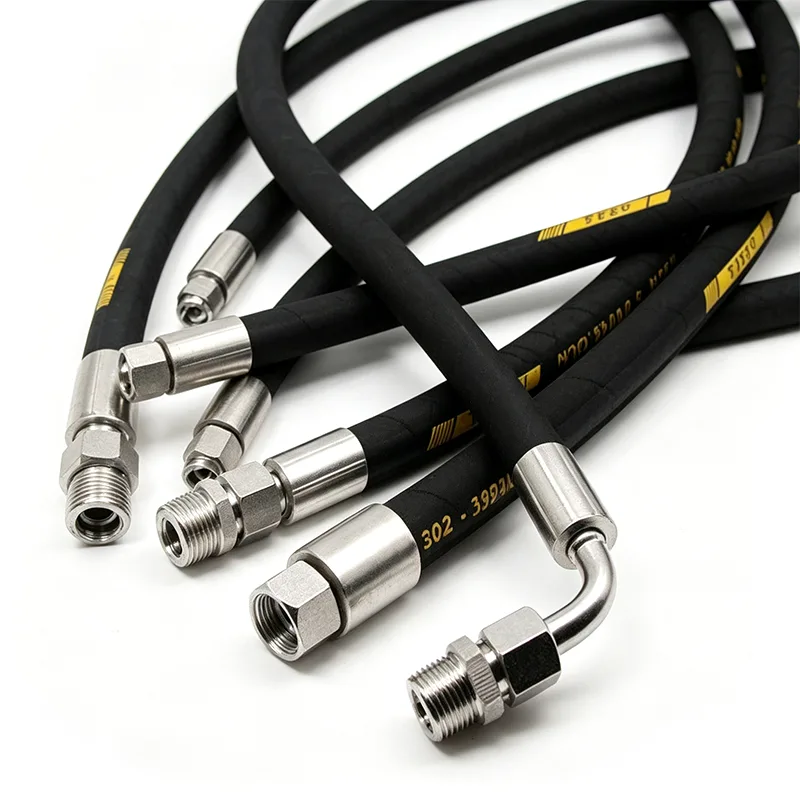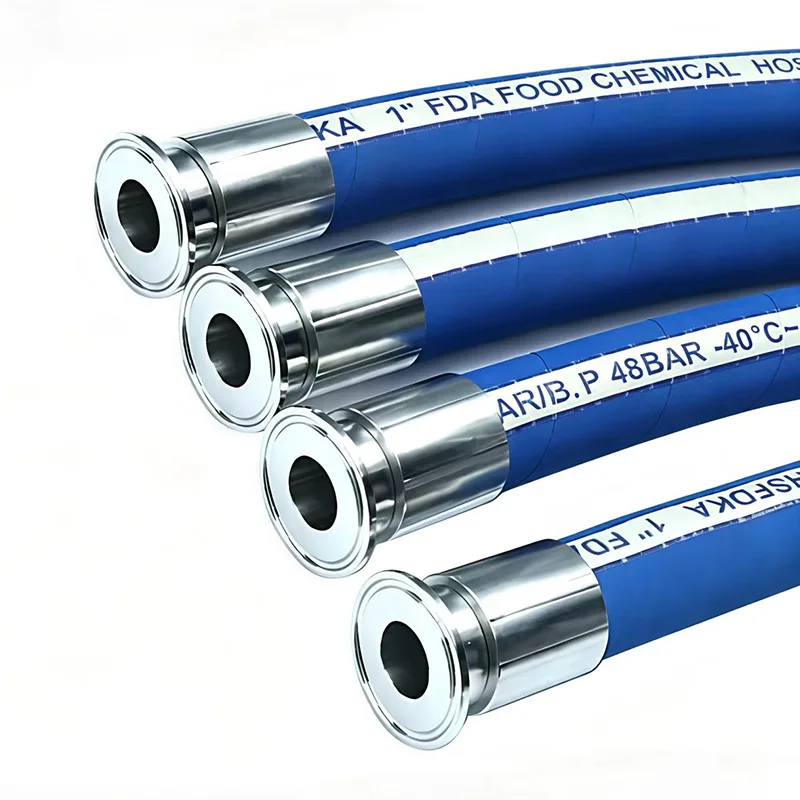

Many industrial purchasers are confused: How should fabric-reinforced rubber hose be selected when conveying different fluid media? Choosing the wrong inner rubber material can easily cause hose swelling, cracking, leakage, and bursting, directly leading to equipment failure and safety hazards. As a professional hose manufacturer, Hebei Zhehan Rubber & Plastic Products Co., Ltd., based on years of production and supply experience, explains the key selection points of fabric-reinforced rubber hose for different media in a Q&A format, helping domestic and overseas purchasers quickly complete product selection and avoid losses caused by selection mistakes.
A: Water conveyance and compressed air conveyance are the most common working conditions for fabric-reinforced rubber hose. For conveying ordinary cold water, agricultural irrigation, and construction site water supply and drainage, priority should be given to fabric-reinforced rubber hose with natural rubber inner layer, which offers good flexibility and high cost performance. If it is hot water, EPDM rubber inner material should be selected to improve heat resistance. For conveying compressed air, in addition to confirming medium compatibility, the working pressure must also be checked. The number of fabric layers must meet the working pressure requirements and reserve a safety factor. Hebei Zhehan Rubber & Plastic Products Co., Ltd. has multiple specifications of conventional water and air fabric-reinforced rubber hose in stock, and also supports non-standard length customization.
A: For conveying diesel, lubricating oil, and mineral oil, ordinary natural rubber hose must never be used. Oil will cause rubber to swell and fail. NBR rubber should be selected as the inner layer material for oil-resistant fabric-reinforced rubber hose. It should be noted that NBR rubber with different acrylonitrile content has different oil resistance capabilities. The higher the oil temperature, the higher the requirements for the inner rubber formula. When purchasing, you cannot just look at the appearance; you need to confirm the inner rubber material report with the factory. Hebei Zhehan Rubber & Plastic Products Co., Ltd. can adjust oil-resistant rubber compounds according to oil type and temperature parameters, ensuring that the hose can convey oil for a long time without bulging or leakage.
A: For conveying low-concentration acid and alkali sewage and light chemical waste liquid, ordinary water hose cannot be used directly. EPDM rubber inner layer fabric-reinforced rubber hose should be selected, which can tolerate a certain concentration of acid and alkali corrosion. For high-concentration strong acids and strong alkalis, ordinary fabric-reinforced rubber hose can no longer meet the requirements, and special rubber formulas need to be upgraded. We remind purchasing customers that they must provide the medium name, concentration, and working temperature so that the factory can accurately match the hose material and avoid hasty selection that leads to rapid product damage.
A: Looking only at the medium is not enough. Working pressure, medium temperature, and usage environment must also be considered comprehensively. The higher the pressure, the more fabric reinforcement layers are needed. For outdoor open-air use, the outer rubber layer needs to have ozone resistance and aging resistance. Some low-priced fabric-reinforced rubber hoses on the market use substituted inner rubber materials. Problems may not be visible in the short term, but they will fail quickly in corrosive medium environments. Hebei Zhehan Rubber & Plastic Products Co., Ltd. insists on customizing inner rubber formulas according to actual working conditions. All fabric-reinforced rubber hoses undergo pressure and appearance sampling inspection before leaving the factory, and are supplied in bulk to global customers.

| Conveying Medium | Recommended Inner Rubber Material | Applicable Temperature | Precautions | Typical Application Scenarios |
|---|---|---|---|---|
| Cold water, irrigation water, compressed air | Natural Rubber (NR) | -20°C to +60°C | High cost performance, cannot convey oil | Construction site water supply and drainage, agricultural irrigation, air compressor air supply |
| Hot water, low-pressure steam | EPDM | -20°C to +120°C | Cannot convey mineral oil | Hot water conveyance, industrial circulating hot water |
| Diesel, engine oil, lubricating oil, mineral oil | Nitrile Rubber (NBR) | -20°C to +100°C | Never use ordinary natural rubber, avoid swelling and bulging | Construction machinery oil conveyance, equipment lubricating oil conveyance |
| Dilute acid, dilute alkali, sewage (≤40% concentration) | EPDM | -20°C to +80°C | Not applicable for high-concentration strong acid and strong alkali, special rubber compound required | Chemical sewage, light corrosive waste liquid conveyance |
| Seawater, salt water | EPDM | -20°C to +80°C | Resistant to chloride ion salt spray corrosion | Coastal drainage, seawater circulation conveyance |
Hebei Zhehan Rubber & Plastic Products Co., Ltd. reminds that in addition to the medium, working pressure, number of fabric layers, and usage environment must also be confirmed. For high-concentration strong corrosive media, please contact the factory to customize special formula fabric-reinforced rubber hose.
The core of fabric-reinforced rubber hose selection is matching the medium with the inner rubber material. Water, air, oil, and acid-alkali media correspond to different rubber formulas respectively. Hebei Zhehan Rubber & Plastic Products Co., Ltd. is deeply engaged in the R&D and production of fabric-reinforced rubber hose and can provide customers with complete selection references. Domestic and overseas purchasers are welcome to provide working condition parameters for consultation and quotation.